
Andrea Pflaumer: Style Essences, Color Harmony, and Finding Authentic Style At Any Age
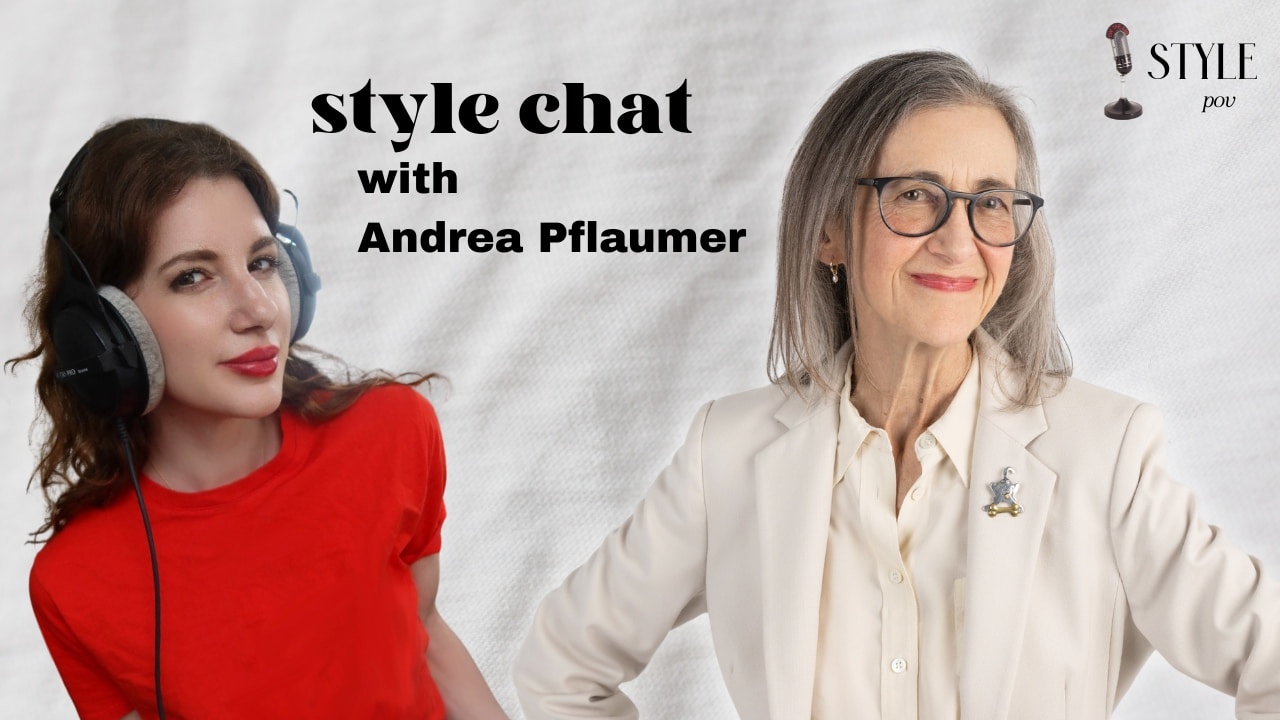
In this episode, I interview Andrea Pflaumer, author of ‘Shopping for the Real You’ and ‘She’s Got Good Jeans,‘ about developing an authentic personal style. We discuss the significance of authenticity, the role of style essences and color harmony, and practical steps to craft a style that truly reflects who you are.
Andrea shares her own experiences with color and style counseling (studying with John Kitchener), and the importance of discovering a unique style that highlights individual personality. We also delve into the need for patience, avoiding fleeting trends, learning style lessons from different generations, and the profound link between personal style and self-care.
Listen to it:
Watch it:
We may earn a commission from you clicking a link below. And as an amazon associate, we earn on qualifying purchases. Full affiliate policy, here.
More From Andrea Pflaumer:
Andrea’s Resources:
Shopping For The Real You (amazing overview on developing style and has a great chapter on style essences!)
Online course: Discovering Your Inner Style: An Adventure in Dressing Authentically
Free course for newbies to style and color: Lazy Person’s Guide to a Perfect Wardrobe
New book launches on July 21: Self Care: 30 Compelling Life Lessons From Happy, Healthy, and Successful Women…and Some Men!
Transcript (generated):
Gabrielle: [00:00:00] Hi, I’m Gabrielle Arruda, host for the Style POV podcast, and I’m here to help you learn to trust your fashion instincts, hone your authentic style POV, and find strength through style.
Gabrielle: Today I’m thrilled to welcome Andrea Pflaumer, author of the Amazon bestselling book, Shopping for the Real You, and the ebook, She’s Got Good Jeans. She discusses topics like style essences, color harmony, and practical steps to build a style you love at any age.
Gabrielle: And you can find more information on where to buy her books and her website linked in the show notes. So welcome, Andrea. Anything you’d like to add?
Andrea: Nice to be here, Gabrielle.
Gabrielle: I am so excited to have you. I think today we’re going to be discussing unlocking your style potential, like how to approach style evolutions, different style approaches, valuable style lessons that you can learn across generations, and ultimately finding that like big goal of an authentic personal style that resonates with your soul, first I want to go a little broad, and I like to get everyone’s definition of what authentic personal [00:01:00] style means to them.
Andrea: I feel that Personal style is a reflection of your whole being. It’s something that even shows up when we’re children. You can tell little kids the kind of clothes that they choose to wear. Of course, they wear crazy things when they’re younger. You get a sense of who the child is based on what they pick out and what they love.
Andrea: It’s like a blueprint for expressing our authentic self. It gives us the parameters that will make us feel comfortable in our skin. For showing the world who we are and how we want to be seen in the world. Even if somebody says, I don’t care about fashion, the way they dress, Is an expression of that, of who they are.
Andrea: They probably have a, a whole lot of the natural style type. I don’t care about that. But fundamentally it’s It’s a way to, to show up in the world authentically. And that’s a very important thing, I think.
Gabrielle: Oh yeah, [00:02:00] definitely. There’s this great Misha Prada quote that I’ll probably butcher, but she says something like, I’m tired of people who don’t care about what they wear on themselves because even if they don’t care, they’re still putting clothes on every day and they’re saying something with those clothes.
Gabrielle: So there’s definitely an intention there. I love that word blueprint. I think that’s such an interesting concept. Do you think that our authentic styles are like born like with us as a, as children and we grow? Or do you think that, you develop it when you’re older and you have more of a sense of self?
Andrea: Yeah, I think so. I think that’s very true. We grow into it and it becomes who we are, but I want to backtrack this for a second and talk a little bit about why authenticity is important because it’s exactly what you say. You grow into something it’s like the thread. Of who you are.
Andrea: I use the word blueprint, same thing, and, but the reason it’s important is that, [00:03:00] we’re so powerfully influenced by social media these days, and especially younger women, and what happens is that if we’re dressing in a way that doesn’t resonate with who we are intrinsically, we’re creating that false blueprint, It almost builds a fence around ourselves in a way.
Andrea: You’re not showing up in the world. And when we interact in the world from that level, and try to hold on to it in that same way over time, basing it on what somebody else looks cool in or looks good in, it’s it’s very effortful, and it takes us away from our essence. It doesn’t breathe, it doesn’t evolve.
Andrea: And so staying true to your style and letting it breathe and evolve with you as you grow, but maintaining that thread through your style essences is a way of showing up [00:04:00] authentically in the world. And the reason that is valuable is that when you do that. The people you interact with and the people that are attracted to you, that you will draw those people who are also authentic because they see you for who you are,
Gabrielle: it’s magical,
Andrea: something false that they fell in love with when they were, when they saw this.
Andrea: other version of you. So being authentic to yourself, maintaining that, that thread throughout your life, it’s just a way of, what you see is what you get. They just know it, they feel it in their gut. You’re authentic. Okay, I can talk to you. I can trust you. And trust is one of the most important, if not the most important thing in relationships.
Andrea: So I think, Style and style essences and our developing our style is not a superficial project. . It had a very profound effect on my [00:05:00] life.
Gabrielle: I think it’s such a wonderful way to connect with your self identity and start to tap into who do you want to show up in as the world because you know if you keep on just Going from trend to trend or trying these things that aren’t resonating with you.
Gabrielle: It’s like this kind of hedonic treadmill that you can’t get off because it’s always, well, next season there’s something new and next season I’m supposed to look like this. And I think it creates a disconnect between your own personal, Soul because it’s like you’re like do I even really this or do I just like this because the world is telling me This is what’s popular right now How do you think people should go about doing that kind of self identity work and trying to figure out is this really authentic to me?
Andrea: I think that’s where the work of a stylist comes in It’s valuable in that way. If you have somebody who really understands the elements of it You They can help you bring that out in yourself. The self identity work, okay, so I’ll tell you [00:06:00] my personal experience with this. I think in every family, the people that are closest to you, you identify with, you’re so close to them. And so it’s very common to dress the way they do you’ll see people in the family express themselves the same way, their facial expressions are similar, but when I first had my colors and style done the right way, I’ve had it done a few times I went through personal style counselors, which was the one that, that I stuck with and what it did was it validated for me, my differentiation, the pieces of me that were a little different.
Andrea: From my mother or my sister or my grandmother and they said this is me. It’s a kind of self actualization, it’s a form of more solidifying who you are in the world. So it doesn’t change your identity exactly. It’s the opposite.
Andrea: It helps you unfold who you are in [00:07:00] your own unique way. And that’s a wonderfully affirming thing to do for somebody. I think that’s the most wonderful thing that stylists do, that you do for your clients is help them see their individuality. It’s a way to, what in psychology they call it, to individuate.
Andrea: And I think
Gabrielle: it gives them that ownership, that ownership of this gets to be mine and it gives them the confidence to claim that because it can feel intimidating to be like, yes, these are my colors, or this is my essence, because, there’s just a lot of variables that you’re not sure on.
Gabrielle: So when a stylist can give you that Ownership that title it makes it feel like it can be your own and that you can see the vision because you’ve been propped up and you’ve been supported in this information, you know You’re going down the right path, which is encouraging, you know It’s like map directions like we’re gonna nudge you this way and you’re like, yes, this is what I wanted to do can you talk a little bit about you said you went through a couple different iterations of styling and counseling what [00:08:00] did you find that PSC gave you that other ones did not?
Andrea: The first one it was only two primarily, and then I’ve looked at a lot of others. But when I was in my early thirties, a friend when I lived in Southern California said, Oh, you should go get your colors done. And I thought that was a cool thing to do. Because even as a child.
Andrea: I can remember clothing that I had when I was six, seven, and eight years old. And I remember as a child I would look at things and say, I love that color, but it’s not quite right on me. So I went to get my colors done with this very nice young woman. It was around the time of, Color Me Beautiful
Andrea: and she said Oh, you’re a spring. Yeah. I am not a spring. And she put out all these colors on me and she picked the colors actually, I think my ex husband went also and had his done. She said, Oh, you’re both springs. We were different. He was. I don’t know. And so I always felt a [00:09:00] little uncomfortable in those colors.
Andrea: It didn’t make sense to me. And then when I moved up to Northern California, some very close friends you must go get your colors done at this other place. It was one of the people that was working with personal style counselors at the time. I hope he’s no longer there. He laid out a bunch of colors for me.
Andrea: And I went home and cried because they were so dark and they were so drab and kind of depressing.
Gabrielle: Tears of sadness then. I thought you were going to say tears of joy. Sadness.
Andrea: It was tears of sadness. I wasn’t happy. So a couple years later, I went to see John Kitchener and he said, Oh, no, no. So he added the element of me that is spring, because I’m 70 percent
Andrea: earthy rich, which is fall, autumn, and then I’m 20 percent spring and 10 percent of summer. And I think, that’s [00:10:00] part of the differentiation when you really get it fine tuned. And so the darker colors now, I get them, I love them. They are my basics, they’re the things that I use for suiting pieces or for my Basic classic pieces, I love them, but I will wear something that has some of the spring element in it, like my greens.
Andrea: My greens, with spring the colors are lightened up and brightened up. So I have some colors that are like that, but they work for my mostly autumn coloring. So that’s what I say. It was, it was a process of learning. And then the more I went into it, the more fascinated I became. And there are many good color analysts, I’m sure, out there I just think that if somebody just says to you, you’re an X or you’re a, yes, be careful because it’s a very rare person.
Andrea: That’s one thing. [00:11:00] Yeah, it’s like our style is mixed. Our coloring is a combination for most of us of multiple colors. Yeah,
Gabrielle: it’s like customizing the palette to be more expensive than just these color qualities, or this general thing. And it’s interesting that like, when you reframed the darker colors, that they felt better.
Gabrielle: It was like, okay, I can get these darker shades, they just have to have a balancing point for me. And so that’s it wasn’t so sad and scary when it felt like it was more of a representation of you. And it was all of you, we’re gonna focus on the majority. It seems like very customized in that sense.
Gabrielle: Do you think that The beauty of the style essence system is that it really gives you a unique recipe in your style and that you get To be the chef when you put these things together because you get to decide I like my shaded colors as basics I don’t want them as my you know, main blouse or something like that,
Andrea: I love the food reference.[00:12:00]
Gabrielle: I love a good analogy.
Andrea: Yes, because I think that just like with coloring, our style it traverses several different styles. I think that it’s true that there are fundamental style types Yes.
Andrea: That most of us fall into. I do agree with that. I, starting with the most dynamic one, which is the dramatic. And then the natural. And then, I’ll just enumerate then the, starting with the dramatic, then natural, then high spirited. Which I have a lot of. And then classic, which is the balance point.
Andrea: I personally think everybody can wear some classic pieces. Almost everyone. Yeah. And then there’s the. The less dynamic, I won’t say less dynamic because they’re dynamic in their own way, but there’s the less in your face. So there’s the romantic, and then there’s the youthful, and then there’s the angelic or the ethereal type.
Andrea: Most people run a gamut of several of [00:13:00] those. One of the biggest mistakes that people make, not only in choosing the wrong color, but they tend to emphasize one of their lesser style essences.
Andrea: And I’ve and it’s the hardest thing for some of my clients is that when they have like equal amounts of certain pieces, like if they’re equally natural and romantic what do we do? How do I adapt that? How do I make that work? And so I think, again, it takes time, it takes a good eye, it takes patience, learning about yourself, experimenting, trying to see what will work, that balance those and express those elements in us that are the most who we are, and not over emphasizing one.
Andrea: One of the, interesting point, one of the lessons that I learned from John Kitchener, was that if you have, for example, I’ll just give [00:14:00] percentages. If you have, for example, at least 25 or 30 percent of particular style type, then you can wear almost head to toe that style. You can probably get away with it.
Andrea: If you have a smaller amount, then you wear just one garment in that. And that works. And then if you only have a tiny little bit, I said to him once, because I have 5 percent angelic, ethereal, I said what do I do with 5 percent angelic? And he said, shoelaces. So I think if you like a particular style or you like a particular color, and it’s maybe not perfect, then wear it away from your face.
Gabrielle: Yeah, so do you think that’s a general recommendation that if it’s a smaller part of your blend to put it lower as well? So that it’s de emphasized because, ultimately we’re drawn to the face, [00:15:00] unless we’re creating another focal point within the outfit. The face is where we want to bring people, right?
Gabrielle: It’s us, we’re not trying to create style armor. We’re trying to be seen as our best selves.
Andrea: That’s exactly right. That’s exactly right.
Gabrielle: So you’ve talked about a little bit about developing personal style and adjusting it to your needs, especially in like shopping for the real you getting in touch.
Gabrielle: With yourself. How would you say that someone should approach building out a wardrobe based on these things? Because there’s exploration phases, right? You get this new information, you’re 40 percent this essence, or you’re this color harmony. And it does take a little while to say, okay where do I put this?
Gabrielle: Where does it work for me? And you can talk about your own journey too, because you said, this was really the key that helped you unlock things.
Andrea: Yeah, I think it was a matter of becoming strategic and having a little discipline. Because those of us who have a fair amount of, you have a lot of youthful, romantic, and high spirited, and I think people that [00:16:00] have a lot of those qualities, you would get bored real easily if things weren’t, fun or juicy.
{mind explodes, but I keep my compsure haha}
Andrea: And it just takes a little discipline. To say, okay, what do I need? Where am I going? Where am I going to wear this? And how does it make me show up? Yeah. And so I think part of it is when I go shopping now, this is a funny part of it. When I when my current husband, when I get his collar stance, Oh, I don’t want some guy telling me what to wear.
Andrea: And now he, every time we go, he says, Oh. Is this my color?
Gabrielle: So it’s funny how fast that changes, right? You’re like, I love this new information. It’s not confining. It’s liberating thank you
Andrea: Yes, exactly. It’s liberating and that’s and I think that’s one of the things I tell people all the time It’s not that it’s gonna [00:17:00] restrict you from having some fun, but it’s Your eyes and your wardrobe, your closet, to some, to new things, to give you a chance to just show up, but yeah, I think it takes a little while. I remember one of, one of my teachers said that it takes about a year or two, probably two years to build a closet based on your true colors and style. Part of it is that we don’t like to let go of things we’ve been attached to if they’re not quite right.
Andrea: Yeah, and the other reasons I think is that it’s an economic reason for one thing. You don’t want to buy a bunch of things that you’re not going to use again and again. And this is one thing I mentioned to all my clients, and I see it in my, I wrote in my book too.
Andrea: Buy the best that you can afford and wear it to death. Because when you see really fashionable, cool people around the world, like in, Europe, I mentioned this a lot, in Europe, they have very small [00:18:00] closets, yeah. And so they can’t have a lot of junk and they’re very careful. And I know when I lived in Europe for a few months, And when you go into the shops there, it’s not like when we go and we look and we say, Oh, what’s new?
Andrea: The women walk in and they say, I need an X, I need a new jacket. It has to be this color. What do you have? Or I need a new sweater and I want it to be in this color. The women there go in with intention, knowing what they’re looking for. You can always open yourself up to serendipity that you’re going to find something you didn’t expect.
Andrea: And that’s fine. But once you know your colors, and particularly if you have color swatches, which really helps when you go shopping. Yeah. For sure. Then you can be very discerning and know what you’re looking for and make those decisions. And it’s not a hard decision. It’s definitely, you know it, [00:19:00] right?
Andrea: When you put clothes on one of your clients, don’t you just, they know it and you know it when it works.
Gabrielle: There’s a good feeling with it, where you just know, okay. We’re going in the right direction here. The patience has been worth the time we spent to find this A plus piece.
Gabrielle: Because, I think one of the biggest mistakes for people in finding their personal style, for me, is that we get in a rush to figure it out. And we want the answer. What is this gonna tell me? I need to know my color seasons. I need to start buying all new pieces. I want to do a wardrobe And you’re like, slow down.
Gabrielle: Like we’re not doing an overhaul. Because you’re just going to fill your closet with all new pieces that don’t necessarily work. Like you need to build a relationship with this new style input, whether it’s color, style, essences, whatever it may be, you’re seeing yourself in a new light, right?
Gabrielle: What do you think are some other common mistakes that people fall into if they are trying to build out like a truly authentic personal style?
Andrea: I think impulse buys, that’s one of them, one of the [00:20:00] problems, and trend thing is very interesting. I heard a woman that I follow on YouTube say something I thought was very interesting. She said, she was talking about the difference between trends and modernity. It’s so easy when you see a new trend it really varies on the generation But it’s easy when you see a new trend and say oh I want to try that And sometimes those are the things that are going to like dated the most quickly, you know I think you asked one of the problems When I work with my clients they will have had something that was maybe expensive that they bought quite a while ago and that at the time it was trendy, you know what a trend is because it identifies a time in history.
Andrea: Yes. The 50s were the bullet bras, 60s were the mini skirts and go boots, and it goes on. So those are trendy modernity and being fashion forward, I think, is important. [00:21:00] It’s more a matter of taking classics, because, have a torso, we have limbs, and you can only put so many combinations like that on a person.
Andrea: If you take some fundamental classic pieces, or at least what’s classic for you, and think of them in a slightly different way, the way that you see. Something that has a little bit of edge to it, or more modernity, or makes it more of interest, and isn’t so identifiable and quirky that it won’t work for a long time.
Andrea: Yeah. You’re able to stay fresh. You’re able to move forward. There’s elasticity in your style. You still have this thread of who you are and how you’re presented to the world, but there’s a little more breath. There’s more breathing in it. Whereas when you just follow a trend again, it’s just not going to [00:22:00] last terribly long.
Andrea: Like for example, I just bought some Mary Jane flats with a elastic around it. I never used to wear things like that because I thought they’re a little too young for me. But now I see there’s something so simple and attractive by them and they’re on my feet.
Andrea: I’m not wearing them near my face and that’s something that’s going to last for a long time. There’s certain things that last.
Gabrielle: I think you mentioned this a little bit in your book too where you talk about like style and costume, that kind of like innate sense of does this feel on me?
Gabrielle: And you can have like your own classics or your own basics. But you just style them slightly differently to be a little bit more modern, you change what layering piece you use or how you cuff something or, even just how you pair something, but you want your tools to not feel so outdated six months later, because then you’ll never get the real work done because it’s always a complete wardrobe turnover every six months, that creates A very [00:23:00] difficult approach to style because like you’re it’s that turnover is just untenable after a while, right?
Gabrielle: How do you think that each generation approaches style and like what can we learn from different generations or different different stages in the personal style?
Andrea: I think, when we’re younger, we’re experimenting more. We’re trying to find who we are. We’re trying to define ourselves in the world and so we experiment
Andrea: and so I think that’s, that’s perfectly acceptable, the shorter skirts the, showing more of your upper arms. But there’s also that quality of experimentation and, the quality of joy in dressing that a lot of younger people do. And when women get older, sometimes they get stuck. Over time they develop a groove, they know who they are. But I think what older women can learn from younger women is to experiment a little with those new modern ways of exploring style. My [00:24:00] friends are not going to go I won’t say they won’t wear bikinis, because I know some in my age do.
Andrea: I won’t, but it’s mostly about my arms. So a lot of older women are not going to show as much skin, and that’s just the reality, and that’s fine. There’s some element that younger people are more willing to to experiment with. And that’s something that’s just fun, think older women can learn that from younger women. And on the other hand, what I think that older women, I think the most valuable thing that we offer, And must offer is to be a role model to show how age and style can be. Wonderful. . I love being the age I am. I have NI would never wanna be younger.
Andrea: I just turned 76 and I’m so happy’s so much more freedom I so it’s up to us to show that’s okay. I know that there are people like the wonderful Iris Apfel who just passed. Earlier this year, [00:25:00] and she was a role model for many people, but primarily because she was willing to break boundaries and she was Mad about color and texture I would never dress like that and there were very few people who would dress like that But she gave permission to some people to do that.
Andrea: You know she maintained that youthful quality of experimentation. So maybe you’re not going to go full on a whole arm of different, colorful bangles, but maybe you’ll wear a few. Try a different necklace, like something that she, maybe you’ll just embrace color more. So the youthful quality of experimentation is something that older women can gain from, and I think the importance of continuing to care about how you look is important for older women to model that for another generation.
Andrea: So there’s not this. societal fear about getting older. We’re all going to get older. [00:26:00] We’re all going to die, but have fun while you’re doing it.
Gabrielle: Yeah, I think ours did such an amazing job at changing the baseline for what people thought you had to dress like at a certain age. She changed your perception.
Gabrielle: So it was like an expanding. Visual because you’re like yeah, I don’t want to dress like her necessarily, but look at how great she looks like, look at how much this has changed my perception. I don’t need to dress dowdy just because I’m this age or I don’t need to give up on my style because I’m this age.
Gabrielle: If we think about it like a recipe that we’re building. Like, when you’re young, you’re trying to figure out what are your tastes, even? Do we like, chocolate chips, or do we like mint chips, or, and, at a certain age, I think it can also shift to I have my recipe, it works for me, I’m going to stick to it.
Gabrielle: But, you don’t know, maybe throwing cinnamon in there will be, like, that magic spark that, like, all of a sudden, it elevates your taste. I think that it’s really important to remember that this is just always an evolution. You’re always turning from new input to putting that into action to, okay, now I have a new [00:27:00] style hurdle I want to hide my arms at the beach.
Gabrielle: How can I do that in a new way that feels authentic to me? And you’re always tweaking it for the style hurdles you encounter, and then enjoying the style wins after you figure it out. How do you help your clients, Approach these things and approach finding a style that feels authentic and also feels age appropriate.
Gabrielle: Is there some like advice that you can give them to really embrace this new way of thinking?
Andrea: Right. And, the whole concept of age appropriate style comes in, comes into play a lot. Because If you have a lot of high spirited quality then you can be more experimental.
Andrea: I use that word for everybody, but it really, if you have more high spirited quality or drama, you can be a little bit more experimental and it works for you.
Gabrielle: So that essence blend is so important to really feeling like the permission almost You’re like, okay, this is part of my uniqueness.
Gabrielle: I should show it [00:28:00] off.
Andrea: Exactly.
Gabrielle: So how do you help your clients foster that positive relationship with themselves? Like after they come to see you and they’re, maybe down on their style or not feeling, I used to be able to wear this and now I don’t feel as comfortable in it.
Gabrielle: Or, I’m not sure what my essences are, right? Nothing feels authentic to me because these are all questions that, people have in this journey. It’s a lot of work.
Andrea: First of all, we have to be gentle and have compassion. I think one of the greatest gifts you can give another person is to see them.
Andrea: for who they are. And so you have to see them. You have to meet them at their level. And I would never tell somebody, Oh, don’t ever wear that. You look terrible in that. Never say that. I’m sure you wouldn’t either. It’s important to help them find the element in themselves that is beautiful, because I think everybody has beauty.
Andrea: When you use that word beauty it’s beautiful. That’s a [00:29:00] loaded term because in cultures it has to do with certain features but authenticity is beauty, when you see pictures of Judi Dench, the British actress with the lines on her face. She looks stunning.
Andrea: She’s gorgeous. Because. So stunning. Yeah. She’s so real and she’s so earthy. Even if a client has gained weight, or has gotten older, or is having some other health challenge, you find the piece that makes them feel beautiful. You see it in them, and you emphasize it. And then you emphasize it in terms of the color, and maybe the texture of the clothing.
Andrea: I think texture is such a really valuable part of styling, right? Yeah. And so when you see who they are and you help them find that piece that emphasizes and reminds them of how beautiful they are, that there’s a piece of [00:30:00] them, maybe it’s the whole thing is beautiful in their mind, but to change their perception from, Oh I’m this, or I’m that, I’m too old, I’m too fat, I’m too this, I’m too To help them see the beauty in that, the juiciness in who they are now, the wisdom in who they are now, the uniqueness of their coloring.
Andrea: That is the gift that a stylist gives. And it’s so affirming. It’s health giving, I think. It’s not just, it’s not just looking good It’s like looking like
Gabrielle: you, yeah, it’s looking like you and finding that like assuredness and in yourself. You had this great Grace Morton quote in your book Prettiness is an attribute of the young, beauty is an ageless quality.
Gabrielle: And I I love that that kind of ties into the self care and self love that you’re not getting less beautiful, you’re finding new beauty in how you present to the world and new strength through these expressions. [00:31:00] When you’re working with clients when do you know that you’re on to something really wonderful? Like, when do you know? Something really resonates with them.
Andrea: You see it in the change in their breath. Instead of being tight, they relax. You see it in their face. I always say about color. When you hold a color up to your face, that makes you look healthy, or brighter, makes your eyes brighter, then you know it works. I was working with one client, she did a lot of some corporate presentations,
Andrea: and so we’re going through her closet and she pulled up a blazer and she’s like high levels of romantic in her personal style. And she pulled up this dark blazer and put it on and she went. That’s what her face did. I say, look at yourself in the mirror. It’s that tells you everything you need to know.
Andrea: Yeah. When you see yourself in something that makes you feel beautiful, [00:32:00] your face changes, your body dynamics change, and your breath changes. The breath is really a very key element. That sigh. Like a
Gabrielle: sigh.
Andrea: I come home. I come home to myself. I think That’s when you know that you’ve hit it for them and they start to absorb it.
Andrea: It takes time for people to change their minds and change their thinking. So you have to give them that room,
Gabrielle: yeah. Cause they have one vision of themselves that they’ve told themselves over and over, I’m this, it can take a while to get to, Oh wait, no, I, like that ownership can take a little while to feel comfortable in.
Gabrielle: It’s interesting ’cause I’ve noticed this with color analysis as well. , like when you put the right color on someone, they like instinctually smile. I swear this happens so frequently. You put it on and they just kinda go it’s like they instinctually know.
Gabrielle: Do you think that sometimes we don’t trust our fashion instincts and, or that we kind of suppress them and do you think we can do anything to improve [00:33:00] that?
Andrea: Yeah. One of the things that, also, I learned from John Kishner, he said, a lot of people are afraid of color because it opens up something in themselves that’s been repressed.
Andrea: Yeah. They’re afraid of the person they’re going to be when they wear that color. Oh my God, is everything else going to change, too? Yeah, it might. It’s
Gabrielle: technical now. What do I do?
Andrea: But I think the point is that we don’t want to suppress who we are, what we can do to improve our ability to embrace those new colors. We just have to be bold at some point, maybe it just means letting go of some things that no longer work and wearing more of the things that work more frequently. A lot of in this culture where we want to change things frequently. In other cultures, when they have something that looks good, they’ll wear it over and over again. Encouraging them to do that is wiser than even trying [00:34:00] to to create a whole bunch of new things.
Andrea: Just a few. Yeah. Create a few elements, a few pieces that work nicely together let them experiment with those, but keep it simple, throw too much at somebody right away. It’s overwhelming. Maybe help them create a couple of outfits, not a lot, and then encourage them to wear those and then tell them to remind themselves, what is it about those pieces that they love?
Andrea: Is it the comfort? Is it the texture? Is it the textile itself that they feel their body feels comfortable in? Yeah, those are the things that, will form that thread of what you’re going to develop in your wardrobe over time.
Gabrielle: Yeah. Cause you need to develop a baseline for this new information.
Gabrielle: You go from wearing black and white to all of a sudden wearing spring colors. It’s a shift, right? And I always tell people like buy one item in your palette, buy a lipstick, buy something that you already like to wear. In your palette because that’ll be your introduction. We gotta get a new [00:35:00] baseline for this new color that you may find you want to explore more and more once you get a little taste of it.
Gabrielle: You want a comfortable entry point. And I think that’s so beautiful what Style Essences can do for you because it Gives you this confidence and these kind of like adjectives that you can ask yourself. Does this resonate with this? Adjective or archetype or vibe because I think that sometimes we buy things and we don’t ever think like what is this piece?
Gabrielle: Like is what’s the texture? What is it telling me? What is it communicating? Because individual pieces communicate things, right? Do you think that there’s any benefit to describing the pieces that you love with adjectives or defining them in an essence blend or an archetype to frame, what is my wardrobe now?
Gabrielle: Is it all natural? Is it all high spirited? Is it playful, energetic staccato lines, things that, that bring energy up? Or is it something that is very natural and coarse [00:36:00] and textured in patterns? Deciphering some of the pieces. So that you understand them in a way that you might not have done when you immediately purchased it, because you’re just like, eh, this goes in the wardrobe.
Gabrielle: I guess I like it, how would you say someone could approach it like that or should they?
Andrea: Yeah, I like that approach very much. I like the whole concept of adjectives and it makes people Think about it more clearly because when you use those in selecting your clothing, like for example
Andrea: is it refined enough for me? Is it playful enough for me? Is it? Sophisticated enough for me. So I think you know, one of the things I suggested in the book is to ask people who love you What do you describe your personality? Don’t necessarily ask them to describe your style, because that may not, you’re developing your style.
Andrea: But if you ask them to describe your personality, they may come up with some words, and there may be some common threads there. And you make up a list of that. And it’s so simple, it’s so direct, [00:37:00] say, okay, I’m going shopping, I’m looking for something that has some juice Not sexiness, but juiciness to it, or softness to it.
Andrea: Yeah, let’s say you have a lot of romantic, and so you’re looking, , does this say that? What does this garment say? What does it speak? What does the color say? Yeah, I love the idea of using adjectives, and then it gives you a template for what to do going forward. And I know that some stylists actually do that.
Andrea: They will give their clients a few words, comfortable, classic, and playful. Those become as important to you as bringing your color palette with you. So you’ve got the colors, and then you go shopping, and then say, but does this fit that element? So I think, yeah, it’s a wonderful way to go shopping.
Gabrielle: Style systems are very [00:38:00] popular right now, what should people do if they find them limiting? How should they approach it? Let’s say they’ve gone to a stylist, they have gotten a firm, essence blend and color harmonies from PSC.
Gabrielle: And now they’re trying to figure out like what about this piece? I really like it. How can I make it work? How do they customize it and go on the journey when the stylist isn’t there to say, okay, here’s an idea, how do you get the training wheels off?
Andrea: What I love is when one of my clients has done it on their own and they finally get it. One of my clients has become a very close friend. I don’t have to tell her much anymore. She knows what to do. Yeah. And so I think yeah, they will adapt it and customize it. It doesn’t have to be limiting, but also I think like with every parent, you have to let the child grow and become their own.
Andrea: And they may do something that you may not have. Chosen for them, but it works for them. And that’s who they want [00:39:00] to be. So I think it’s important for a stylist to step away a little bit from judgment. Some stylists can be a little judgmental and strict about things. But people, I agree, you said earlier, it’s on a gut level.
Andrea: They know if something works and then the smile comes. Because even if it’s not quite right, if it makes you feel joyous and you smile, that’s what people respond to. That’s what people feel about you. So I think , yeah, you can break some of the rules sometimes. Why not?
Gabrielle: Yeah, I don’t even think there are rules because we create our own rules in our head and we apply them sometimes in a narrow way.
Gabrielle: We think if I have this essence, I can only wear this. This is what it’s supposed to be, but really there’s a much more expansive version. That’s what I love about the essence and color harmonies is it’s a full picture. Like you said, you’re, you have the autumn, you have the summer, you have the spring and how you use all those things is up to [00:40:00] you.
Gabrielle: But it’s not going to look the same, another person with a similar essence blend or color harmony blend could look completely different and still be expressing their best self. Would you say that people should release those stereotypes and maybe the narrow mindedness with each and try to really customize that recipe for themselves?
Andrea: Yeah, why not? That’s part of that’s what keeps life playful and fun. I don’t know that I would say to people, go ahead and customize this and do something different. They’re coming to me for information. I give them my information, but I present it in a way to give them room.
Andrea: Here are some ideas. Let’s try this. What do you think about this? How does that make you feel? Great. You know, support them. And if it doesn’t, if it really doesn’t work, then you say, what would you think if, or are you willing to? In other words, you reduce a [00:41:00] little bit of possibility for them playing with it.
Andrea: That’s only if they’re making a big mistake. But if they’re just going off on their own and playing a little bit of
Gabrielle: course. Yeah, I think exploration is important. You learn so much when you try the things out for yourself. And you’re like, okay, I can see that this works
Andrea: here.
Gabrielle: How much do you think personality plays into this and our relationship with ourselves?
Gabrielle: Because I know that having a positive self care relationship with your clothes is important. We want everyone to feel good in their clothes and feel like they’re expressing themselves. How does one make sure that they’re taking care of themselves during this process?
Andrea: Personality is a very direct relationship to personal style. I think that embracing the elements of our personality, the healthy elements of our personality. If they’re real, if they’re not something that we’ve created that’s a false persona, then I think that’s very healthy.
Andrea: But it is part of self care, which is a big issue [00:42:00] for me lately my next book is not strictly fashion related, but it’s called self care. And the thing about self care is, I think that the continual idea through the whole book is. It’s becoming real, like the Velveteen Rabbit, becoming authentic, becoming real.
Andrea: And if whatever you do and if your personality is clear, and is a true reflection of what you feel, and the way you are, and who you are, then embracing that is really important. is a very significant part of self care because it keeps you connected with your soul. You mentioned that word soul in the very beginning and it just set off a light bulb for me because that is the essence of my whole self care book.
Andrea: It has to do with being honest with yourself and staying connected with the deepest part of yourself, [00:43:00] which is that unchanging thread of
Andrea: That’s the word, I love that word because it’s what differentiates us. It’s what stays with us in the in some of the Eastern traditions. It’s the element that continues on with us into our next life. So the closer you stay to that in this life. The more you can grow and evolve into the beautiful being that you’re supposed to be.
Andrea: And your personality will be a healthy one that reflects those pieces. So I think, style is a part of that. And it’s an important part of that. And that’s why I don’t think it’s a superficial endeavor.
Gabrielle: No, I don’t think so at all. When you think about it get one life and what’s great about getting a little older is that you feel more comfortable, going away from the herd, you know You don’t feel this pressure to [00:44:00] conform because you’re like I’ve been alive for this many years and i’m ready to show the world Who I am, and when you get on that journey, you do have to take care of yourself because it is a lot of self identity work and tapping into your soul and bearing that soul to the world.
Gabrielle: I think that’s such an important point is the our image deserves to be heard. Like our uniqueness deserves to be expressed because you’re copying someone else or developing an inauthentic style. Then you’re doing a disservice to the world because the world doesn’t get to see all your unique gifts.
Gabrielle: Do you want to mention anything else about this new book? It sounds wonderful. You mentioned that it talks a little bit about image and self care.
Andrea: There are different sections of the book. , and it’s coming out toward the end of July.
Andrea: The full title is Self Care, 30 Life Lessons from Happy, Healthy, and Successful Women and Some Men. So it covers our health, our mental health how we spend our [00:45:00] time, our relationships and then the last section of the book is called Your Image. And in that one, I write about, finding something in yourself that’s beautiful.
Andrea: There’s a wonderful interview in there with a wonderful woman named Suzanne Blondes who back in the 70s, used to be the Charlie girl , and she’s a skin care expert now, so she talks about skin care from the inside. And then I talk a little bit about the way we express ourselves, shows itself on our face over time
Andrea: It wraps up the idea of connection from the inner to the outer. And I think that’s, a lot of people, you probably find that in your own work now, don’t you? And more people are caring about that.
Gabrielle: Yeah, I think it’s exhausting when you’re trying on different personalities that don’t resonate on a soul level like it just it you need to find those inner connections that make you feel like excited and Thrilled to put your clothes on every day thrilled to be [00:46:00] yourself, you know we want to find joy and inner peace with Who we are in the world and I love that concept of kind of tapping into your inner gifts and you know resonating with it and I think that’s why the essence system and the color harmonies is such a Fascinating topic because it does exactly that it’s trying to share your special gifts.
Gabrielle: Any style tips any anything you want to end with? It’s been such a joy getting to speak with you gosh, I’m definitely going to link all your books. I have And I will make sure that people know where to find you. Yeah, that’s my
Andrea: number one tip by my book.
Gabrielle: Yes, it’s a great book.
Gabrielle: I’ve gifted it to people too.
Andrea: The number one style tip I would give to people is start small. You don’t have to throw yourself in or be brave and change out your whole wardrobe. Start small, experiment, find one thing. Thank you. That’s new, and that’s different for you. This is [00:47:00] what, if you already know what your style and your colors are, you don’t need my advice.
Andrea: But if you’re just starting on the journey, and you’re trying to figure out what it is, find something really charming. Price doesn’t always matter, because you’re going to be able to find a lot of things that are really cool, that are not that expensive. I buy a lot of my clothes from the Gap, because I’m short.
Andrea: I’m 5’1 on a good day. From the Gap and from H& M. H& M has a lot of natural fibers now. So find something that is a little different than you might have tried. And see how you feel about that and see how you look in the mirror when you see yourself wearing that. But I think that’s a good tip,
Gabrielle: I think that’s an amazing tip is to tap into like small bite size movements, this journey goes on forever, right? It’s never really over. You can’t try to race to the finish line because it doesn’t exist, you this has been so wonderful. I will make sure that everyone knows where to find you in the show [00:48:00] notes.
Gabrielle: And I just am so grateful that you came on to speak with us. And it’s been illuminating. I love your perspectives. So go buy her book, everyone.
Andrea: Thank you again. It was my pleasure and my honor to join you. I love what you’re doing. I think you’re doing a very great service.
Gabrielle: Thank you so much. And until next time, everyone.

I loved this sooo much! As someone who not only still on my style journey but also figuring out who I am and want to be, and learning how to love myself – I found that everything you two discussed resonated a ton. Super inspiring. I want to buy allllllll the books!
I think the idea about asking friends/family members to list your qualities/adjectives is great, sometimes we can get stuck trying to define ourselves when people that know us best can do it in a nano second 🙂 Also it’s just a lovely confidence boosting exercise (I did something similar but it was part of a career change course I did, not part of my style work hehe).
Stay awesome,
Kat xx