
Winters: Seasonal Color Overview
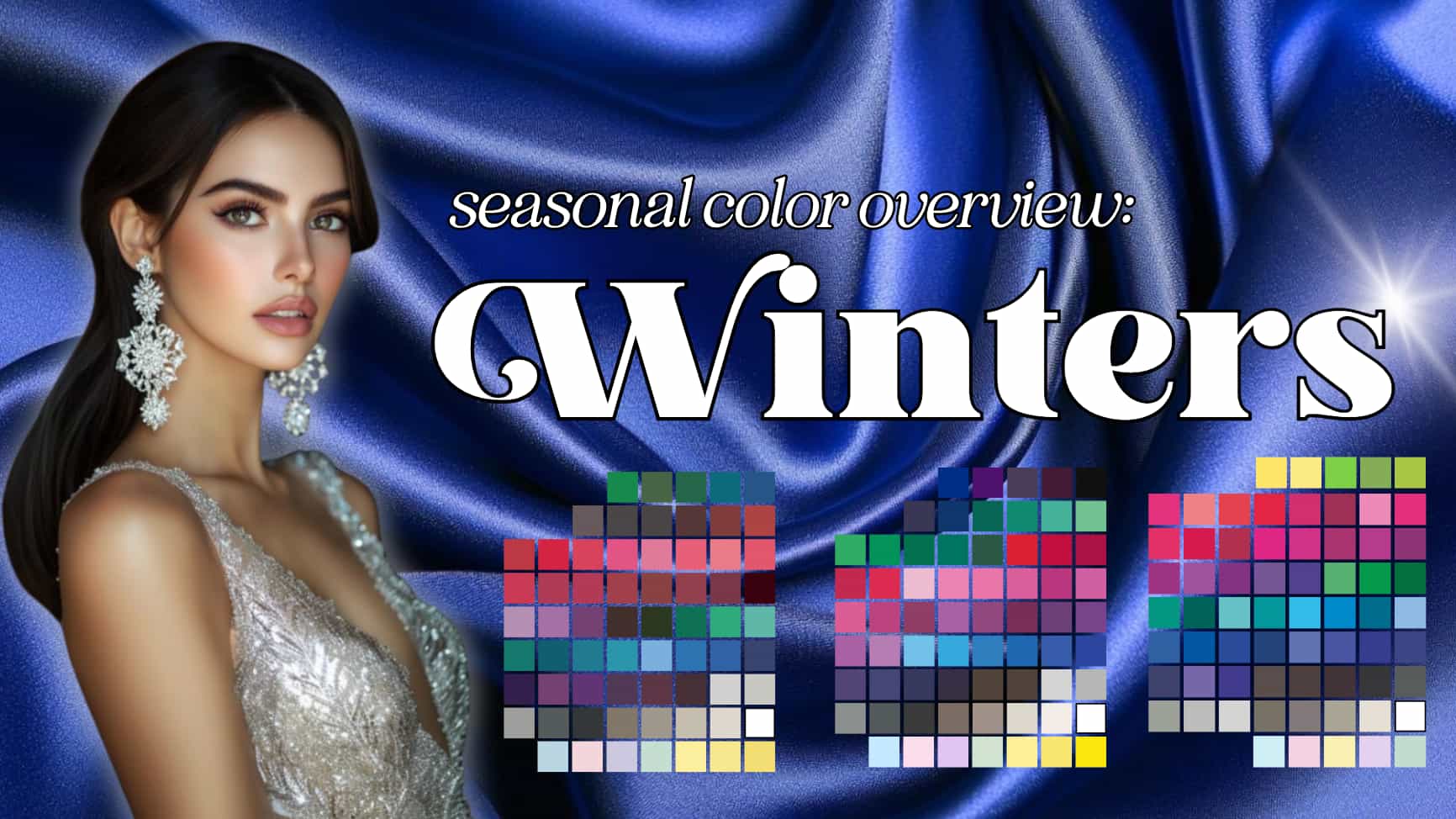
The Essence of the Winters: Seasonal Color
As the season of stillness and clarity, Winter brings with it a crisp, invigorating energy. It is a time when the world is blanketed in a pristine layer of snow, and the air feels sharper and clearer. This sense of purity and starkness is reflected in the Winter color palette, which is characterized by its vivid, cool, and high-contrast hues.
The essence of Winter is not just in its cold, icy landscapes but also in the way it brings a sense of regal elegance and timeless sophistication. Whether it’s the shimmer of frosty mornings or the deep, quiet nights, Winter’s beauty lies in its ability to be both bold and serene, commanding attention with its striking simplicity.
Whether you have been categorized within the general Winter season or are still exploring your specific Winter subtype, this article aims to give you an overview and feel of the essences of the full Winter palettes.
Whether you resonate with the deep, dramatic tones of Deep Winter, the striking cool contrasts of True Winter, or the bright, vibrant energy of Bright Winter, this guide offers an in-depth look at how to embrace the power and elegance of the Winter season.

The Winter season is known for its sharp, blue-based contrasts that create a powerful and sophisticated atmosphere. As one of the boldest seasons in the seasonal color analysis system, it marks the culmination of the cool color spectrum. Winter colors are characterized by their pure, vivid hues with cool undertones. This guide delves into the distinct attributes, color palette, and stylistic expressions of the Winter season, providing a comprehensive understanding of its commanding and refined nature.
Adjectives that Describe the Winters
Winter is captured by a range of adjectives that evoke a specific vibe and feeling. Here’s a list of these descriptors with their meanings. Remember that many factors impact your personal style expression, so if these adjectives don’t align with you personally that is totally ok!
- Absolute: Complete and without flaws.
- Expensive: Luxurious and high-quality.
- Royal: Majestic and noble.
- Acute: Sharp and intense.
- Grand: Impressive in size or scope.
- Severe: Serious and stern.
- Angular: Characterized by clear, sharp angles.
- Imperial: Relating to an empire; majestic.
- Sharp: Keen and clear in detail.
- Assertive: Confident and forceful.
- Jeweled: Rich and vibrant, like gemstones.
- Smooth: Even and polished.
- Authoritative: Commanding and confident.
- Majestic: Grand and dignified.
- Sophisticated: Elegant and refined.
- Bold: Strong and striking.
- Noble: Having fine personal qualities or high moral principles.
- Stately: Majestic and dignified.
- Brilliant: Very bright and radiant.
- Noted: Well-known and distinguished.
- Controlled: Restrained and deliberate.
- Opulent: Rich and luxurious.
- Stoic: Calm and unbothered.
- Convincing: Persuasive and compelling.
- Outstanding: Exceptionally good.
- Striking: Attracting attention.
- Crystalline: Clear and transparent.
- Patrician: Aristocratic and refined.
- Suave: Smooth and charming.
- Cutting: Sharp and incisive.
- Permanent: Lasting and enduring.
- Succinct: Brief and clear.
- Dignified: Worthy of respect.
- Pointed: Direct and focused.
- Supreme: Highest in quality or degree.
- Distinguished: Recognized for excellence.
- Precise: Exact and accurate.
- Tireless: Persistent and energetic.
- Dramatic: Theatrical and vivid.
- Prominent: Easily noticeable.
- True: Authentic and genuine.
- Elegant: Graceful and stylish.
- Proud: Having self-respect and confidence.
- Ultimate: The best or most extreme of its kind.
- Eminent: Famous and respected.
- Zenith: The highest point or peak.
These adjectives collectively evoke a vibe of elegance, clarity, and strong presence, defining Winter’s unique character.
The Subtypes of Winter
Depending on what system you use, the subtypes of winter and their color palettes may vary. I am a certified Sci/Art analyst and in the Sci/Art system we use Deep Winter, True Winter, and Bright Winter.
Find more information on my in-person color services, here.
Dark Winter, also called Deep Winter
Hue: Neutral/Cool
Value: Low
Chroma: Medium High
True Winter, also called Cool Winter
Hue: Cool
Value: Medium
Chroma: Medium High
Bright Winter, also called Clear Winter
Hue: Neutral/cool
Value: Medium
Chroma: High
If we look at their palettes next to one another, we can see the subtle shifts that progress from the darker values to pure cool to the highest chroma levels.
Figuring out that you are in the Winter family alone not even your subtype will be a game-changer for your style and shopping experience. Understanding that you can handle vivid cool colors is a huge first step. With this article, I’m trying to round out your understanding of the vibe and essence of the winter color family.
I want to emphasize that every palette has neutrals, “normal” colors, and its version of bright colors. Seasonal color analysis determines your color boundaries, not eliminating a hue altogether. It narrows your focus so that you can find the colors that truly make you shine.
But I also want to emphasize that PCA (personal color analysis) is only one tool in your style toolbox, and you may find it’s not for you, and that’s also ok.
Winter Color Palette: Overview
If you’re familiar with your Winter subtype, some of these descriptions might not align perfectly with your specific type’s unique nuances. However, this guide is designed to help you grasp the overarching Winter seasonal palette and how each color is represented within it.
Winter is known for its pure and vivid colors. The palette is either crystal pale, vividly bright, or dark, with no dull or muted shades. The colors lack purely warm undertones, making them stark and distinct. The overarching feel of Winter is one of sharp, blue-based contrast, which can be visualized through the brightness and clarity of snow or the cool tones of silver and pure white.
Here are some ideas of how each hue shows up in the winter palette.
Winter Whites
Winter’s whites are the purest, ranging from snow white to silver. These whites are ideal for Winter undertones, which look best against these bright, clear shades. Some off-whites, particularly those with a grayish tint, are also suitable, but golden ivories are not ideal for this season.
Winter Grays
Winter offers the broadest range of grays, from light ice gray to deep charcoal, vintage black and pure black. These grays are created by mixing black and white in various proportions, resulting in shades like oxford, steel, and lead gray. Winter is unique in possessing true black, adding to its distinctive color range.
Winter grays never feel too soft or “heathered” like in the summer seasons. They feel sharp, powerful, and almost like metal instead.
Winter Browns
The browns in Winter’s palette are limited and typically washed with deep gray, resulting in colors like greige (gray-beige), taupe, and charcoal brown. These muted browns are subtle and not a significant part of the Winter palette.
You will see more traditional”browns” pop up in Deep Winter and in Bright Winter because they have that neutral/cool undertone and can handle touches of warmth.
Winter Reds
Winter reds are characterized by their blue undertones, making them cool and intense. The spectrum starts with pure, vivid hot reds and includes deeper shades like ruby red, blood red, and royal red. These reds are vibrant and can deepen further into shades like bright burgundy and wine, especially when washed with black. The progression from bright, pure reds to darker, blackwashed hues is a defining characteristic of the Winter palette.
Winter Yellows
Winter yellows are cooler and brighter, resembling lemon and acid yellow shades with a white wash. These colors, while limited, maintain a clear and vivid appearance, fitting into the Winter theme of clarity and brightness.
In general, a lot of people struggle to wear yellow, especially if it is not a favorite color in their wardrobe already. So don’t start with your yellows if you are new to the winter palette.
Winter Greens
Winter greens range from icey mint, which is whiter than Summer’s sea mist, to pure emeralds and deep pine greens. Those with Winter coloring should generally try to avoid greens with warm undertones, as they can create an undesirable sallow effect.
Winter Blues
The blue family in Winter starts with icy aquas and progresses to vivid, pure shades like prussian and cobalt blue. These blues can be very intense and often darken to navy, which is most flattering when it approaches black.
There is a regalness in winter blues and a lot of majestic power in the winter color palette. If you are new to seasonal color analysis and considering winter, the blue colors might be a great place to start. Check out my best blues for each season article here.
Winter Purples
Winter purples begin with pale ice lavenders and move to royal purples. When these purples are washed with black, they transform into deep, elegant midnight shades, suitable for evening wear.
The brighter purples feel electric, while there are also a lot of regal or majestic purples in this palette as well.
Winter Pinks
Winter pinks range from the palest ice pinks, which are essentially chalk white with a hint of red, to bright and striking hot pinks. These pinks can also brighten into more intense shades like fuchsia. The key to Winter pinks is their clear, cool quality, which aligns with the overall sharp and vivid nature of the Winter season.
These shades can create a high contrast when paired with other Winter colors, enhancing the sharpness and clarity that defines this palette. And they look amazing as a pop color for the striking contrast found in a many winter outfits.
If you want to see more defined pink palettes for each season, check out my best pinks for each season subtype here.
Winter Styling Tips
Winter’s style essence is best captured through dramatic, architectural, and angular silhouettes. This season thrives on formality, making it perfect for elegant evening attire and glamorous or dramatic looks.
- Tuxedos
- Bolero blazers
- Full-length sequined evening gowns
- European tailored suits
- Grecian or Roman-inspired kaftans and tunics
- Chesterfield suits
- Severe chemises
- Long box blazers
- Double-breasted blazers
- Oversized lapels
- Severe straight skirts
- Dropped waist dresses
- Severe cap sleeves
- Little black dress
Patterns and Prints: Winter Seasons
Patterns for Winter should be bold, simple, and inanimate, favoring high contrast. Ideally, no more than four Winter colors should be used simultaneously. The best effects are often achieved by contrasting two neutrals, like black and white, with a pop of accent color, such as fuchsia.
Suitable patterns include stripes, enlarged houndstooth, dramatic checks, windowpane plaids, and geometric designs with good symmetry.
Occasionally, abstract patterns like marble can also be appropriate, particularly when paired with Grecian design elements. Blended, indistinct, or thematic patterns, such as dainty florals, should generally be avoided. But please remember this is a basic overview of the winter seasons; things like your essence blend, body type, and personal style goals all need to be factored in!
Fabrics for Winters
Fabrics and Textures in Winter wardrobes should be refined, often leaning towards those with a more plastic, polished appearance rather than overly natural or rough textures. Suitable materials include:
Evening Fabrics
- Lamé
- Metallic brocades
- Satin
- Shiny leather
- Taffeta
- Charmeuse
- Peau de soie
- Sequined fabrics
- Beaded fabrics
- Metallic meshes
Daytime Fabrics
- Fine wool flannels
- Challis
- Polished cotton
- Silk
- Crepe de chine
- Handkerchief-weight linen
- Jacquard
- Velvet
- Broadcloth
- Ripstop nylon
- Fine gabardines
Fabrics to Avoid:
Heavier textures like tweeds are less suitable, as the natural variation in texture softens the colors and can dampen the strength of the winter palette. But this is not a stringent “rule”.
Want more information on how to choose the right textures, check out this guide.
Jewelry and Styling: Winter
Finishing touches and Jewelry for Winter outfits emphasize elegance and a touch of the unique and bold. Rather than accumulating many small accessories, a single, magnificent piece makes a stronger statement. Silver and platinum are the primary metals for Winter, as warm-toned metallics clash with the cool Winter palette.
Diamonds, sapphires, rubies, black pearls, and crystals are all excellent choices. Accessories might include opera gloves, unique headwear, furs (used generously), vivid red lips, patent leather items, and other theatrical elements. The guiding principle is to use fewer items but with a bold and striking effect.
When dressing, Winters should aim for contrast, with a preference for simplicity over excess. A single large diamond, rather than multiple smaller pieces, can convey the right impact.
Casual dressing can be challenging, as Winter individuals often shine in more formal settings, particularly in the evening. Their elegance and the season’s sharp, blue-based contrast make them stand out.
Embracing the Winter color palette is about more than just choosing cool and vibrant hues; it’s about understanding the powerful impact of seasonal color analysis. This approach not only highlights your natural beauty but also provides a deeper insight into how colors can influence your overall appearance and presence.
By aligning with the sharp, clear contrasts of Winter, you can create a striking, sophisticated look that feels authentic and harmonious. Seasonal color analysis empowers you to make confident style choices, enhancing your personal expression and allowing you to present yourself at your most polished and poised.
Whether you’re dressing for a casual day or a formal evening, the Winter palette offers a timeless elegance that can elevate your wardrobe and enhance your natural allure.
So happy you have written this – I was recently analyzed as a Bright Winter and am waiting patiently for your full guide, but this is great in the meantime. I found out that I sit closer to True Winter than Bright Spring in any case, so it is all very useful! I’m getting back in touch with the bright colors I wore as a kid that I was a little too timid to try out as an adult, but really do look better on me than earthy colors and warm neutrals do. Thanks so much for the work you put into these guides!
That’s so exciting to hear! I am planning on doing a BW guide soon too. But it’s so fun to tap back into those brights and see yourself in a new light. Enjoy your color journey!
Quick question: is it possible for me to be a Winter but also a Soft Natural? I’ve tried finding discussions about it, but it’s been hard. I know it’d be hard for you to vouch for anything without typing me, but since I can’t afford it, I’d love to hear any general tips if it’s feasible.
I’ve been subscribed to your channel for a long while now, and I love watching your content. 🙂
Yes I think that’s possible. Kibbe does include his own 4 season system in his typing but I don’t think its a causal relationship.
Hello, I believe I’m a true winter or one of the winters. My natural hair color darkest brown/black with eyes so dark brown you can barely see my pupils. Very pale skin with a cool/neutral undertone . In fact my nickname at work was Snow White when I was younger. Do I have to wear bold vivid winter colors year round-even in the summer? Also, I am letting my silver hair grow in as the upkeep of coloring every month is getting to be too much work. Do I change my wardrobe colors once I’m full grey? I’m hoping the silver hair against my pale skin and dark eyes doesn’t wash me out. Thank you!
Silver look great on winters, so this should apply to silver hair.
I enjoyed learning about the winter color palette. I think I’m a Bright Winter but I didn’t see it the link for it. I did read above that you are working on it. Yay! Excited to read about it when you upload it. Thank you!
Yes I’m like 95% done with it, so soon… I promise!
Can’t wait for the bright winter guide!!!!!
Monday, it’ll be done!
Is it possible to be a soft winter or a harsh summer? Because I align heavily with true winter, but I also align somewhat with the muted tones of summer
There are other systems that have soft winter or cool summer which are transitional seasons in between true summer and true winter, but they are not within my system of 12 seasonal palette