
The Best Browns for All 12 Seasonal Color Palettes
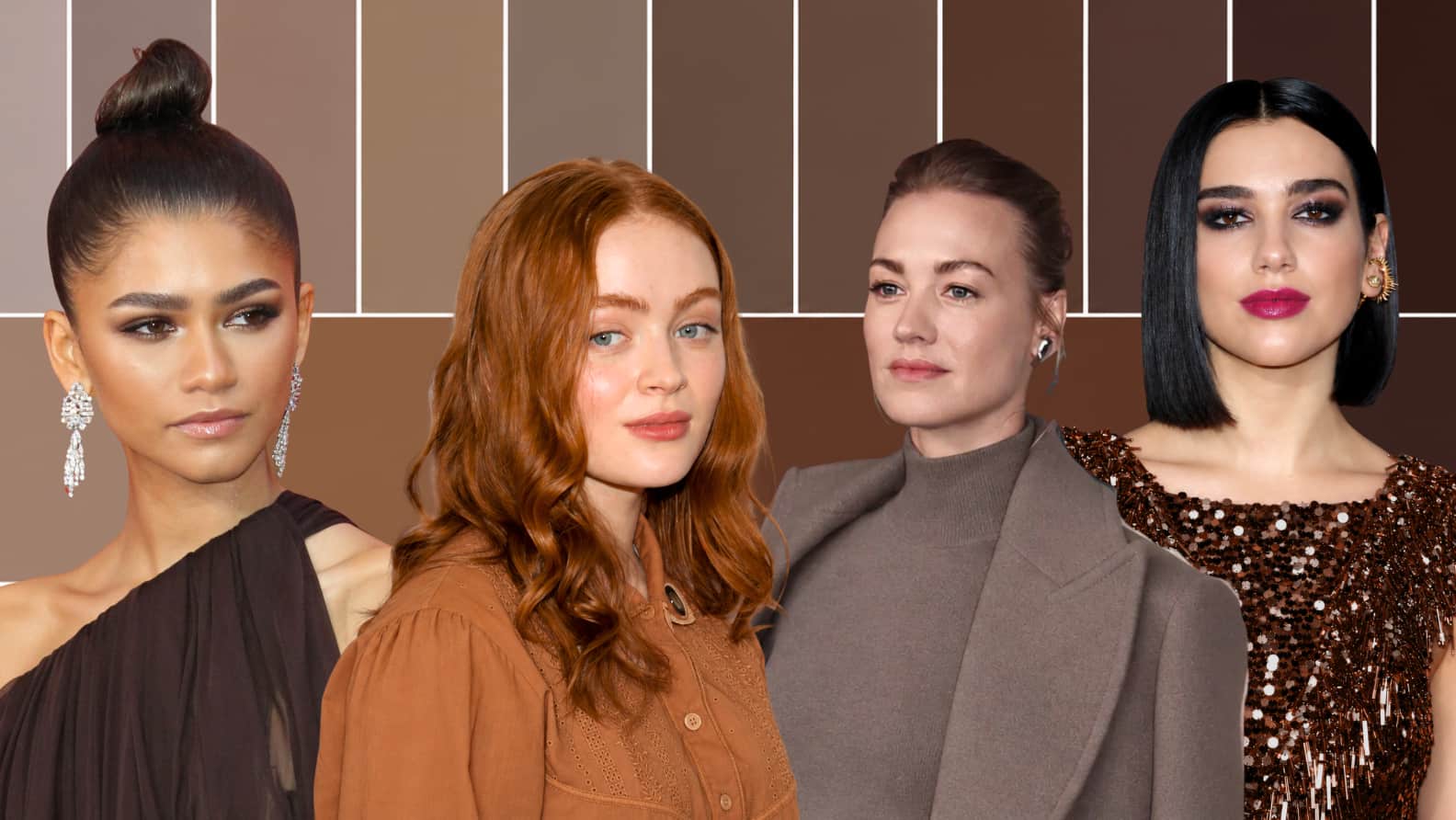
Brown might be one of the most misunderstood colors in seasonal color analysis.
We tend to treat brown as a singular neutral. You either “look good in brown” or you don’t. And if you’re an Autumn, surely every brown belongs to you.
But brown has just as much variation as any other color family. A golden camel and a cool rose taupe may both be called brown, despite having very little in common when we look at their actual color properties. At the deepest end, brown can get so close to black that its undertone is only obvious when the two are compared.
And yes, every season has brown. Every season gets its own version of lights, brights, neutrals, and darks, and this tends to be wildly understated through online color analysis resources.
Winter? Sorry you ONLY get black and white. Brown, that’s for autumn. It’s simply false, or at the very least overly simplistic.
The trick is finding the version of brown that repeats the hue, value, and chroma of your seasonal palette.
Brown is actually a useful color for learning to see those differences. Put a golden camel next to a rose taupe and warmth becomes much easier to recognize. Compare a clear caramel with a muted cocoa, and you can begin to see how chroma changes the color. Then compare either one with espresso and the difference in value is obvious.
So let’s look at what brown actually becomes in each of the 12 seasonal color palettes.
As always, your physical color fan is going to be your best reference when shopping. Screens, photography, lighting, fabric, and texture can all alter how we perceive a color.
Is Brown Always a Warm Color?

No, brown is not automatically warm.
This is probably the most important thing to understand before we start.
We associate brown with wood, soil, leather, coffee, and autumn leaves, so it makes sense that we tend to think of it as inherently warm. But brown shifts considerably between the seasonal palettes.
Summer browns can move toward rose, mauve, taupe, and cocoa. Winter browns become darker and may have violet or red-purple properties. Spring browns tend to have more yellow and clarity, while Autumn has the rich, warm browns we most readily associate with the color family.
So rather than asking, “Can my season wear brown?” a more useful question is, “What does brown look like in my season?” And understanding that when you look at a True Summer Cocoa, it may not read as “brown” when compared to caramel, but it will serve the same function in your wardrobe.
That is what we are going to explore.
Winter Browns
Winter is probably the season most likely to hear that brown simply “isn’t your color.”
But that is too simplistic.
Winter does not have the earthy, golden browns that we associate with Autumn. Its browns need to maintain the qualities of the Winter palette, particularly its saturation and depth.
The brown range becomes narrower here, especially in True Winter, but it does not disappear.
Dark Winter
Hue: Neutral/Cool
Value: Dark
Chroma: Medium-High
Dark Winter has the easiest relationship with brown of the three Winters because of its Autumn influence.
But this is still a Winter brown.
Dark Winter can move into deep red-browns, cool mahogany, coffee brown, and browns that become so dark they begin to approach black. Cooler brown also works beautifully in cosmetics, particularly red- or violet-based browns rather than orange, peach, gold, tan, or warm brown.
This is where comparison becomes incredibly useful. Put a Dark Winter brown next to a traditional warm chocolate brown and the difference should become clearer. Dark Winter needs to retain the cooler red or violet influence of Winter rather than the golden quality of Autumn.
That makes very dark brown particularly useful for this season. It can provide an alternative to black while still maintaining the depth that Dark Winter handles so well.
Cooler chestnut brown can cross over from Dark Autumn in smaller areas, but I would be careful with anything that becomes noticeably golden or earthy.
Look for black-brown, cool mahogany, red-brown, violet-influenced brown, and very dark coffee browns.
Avoid golden camel, orange-brown, warm cognac, and obviously earthy browns.
True Winter
Hue: Cool
Value: Medium
Chroma: Medium/High
True Winter has a much narrower selection of brown.
This makes sense when we look at the palette as a whole. True Winter is completely cool, and cream, gold, camel, peach, and tan are specifically absent from its palette.
But brown does not disappear entirely. It just gets a slightly different flavor.
True Winter has a narrow selection of black-brown, along with dark browns that may have more violet properties. In practice, the easiest True Winter browns are the ones that sit very close to black.
This is an important distinction. Brown has more of a color imprint than black or gray in a True Winter wardrobe. If a dark brown is nearly black or repeats a color already present in the person’s hair or eyes, it can work effectively as a neutral. Otherwise, adding brown can simply add another color to an outfit that does not need it.
So I would not make brown a priority neutral for True Winter. Black, charcoal, gray, and the other established Winter neutrals are easier. But if you love brown, look at the very darkest end of the spectrum.
If you put the brown next to black and suddenly see orange, gold, caramel, or rust, it has probably moved too warm.
Look for black-brown, very dark cool brown, and dark brown with a subtle violet influence.
Avoid tan, camel, cognac, caramel, and golden brown.
Bright Winter
Hue: Neutral/Cool
Value: Medium to Dark
Chroma: High
Bright Winter browns are too clear to qualify as earthy, with more violet properties than orange or gold. Alaska’s chocolate lily is as an example of the darker purple-brown range.
Try to think of these visuals when examining your browns via your color fan.
Bright Winter brown should not look dusty, weathered, or muted. The brown can be medium or dark, but it still needs enough saturation to sit comfortably beside the rest of the Bright Winter palette. If you put your potential brown next to a bright winter sapphire and it feels like it fades away instantly, it is too soft. Comparison is the key to determining your colors, you cannot perceive color in isolation!
Finish can help here as well. A smooth brown leather or fabric with some polish can maintain the clarity of the color more easily than a distressed suede that visually softens it. Consider this article if you’d like to dig into that deeper.
Bright Winter also has Spring influence, but that does not mean camel or orange saddle brown suddenly becomes a good neutral. The palette still needs a Winter level of clarity and is mostly cool-based.
Look for violet-brown, cool dark brown, polished chocolate brown, and black-brown.
Avoid dusty cocoa, camel, peanut-butter beige, orange saddle brown, and weathered earthy browns.
Curious about reds? Whether it be dark, bright or true, find your perfect hue in this Best Reds seasonal color guide.
Spring Browns
Spring brown is where we need to let go of the idea that brown has to feel earthy.
Spring is warm, but it is also clear. Its browns reflect that.
Spring browns tend toward yellow-based browns, golden browns, tan, honey, and desserts. What separates these colors from Autumn is that they retain more clarity and don’t have the same muted, earthy effect.
Bright Spring
Hue: Neutral/Warm
Value: Medium
Chroma: High
Bright Spring needs brown that can keep up with the saturation of the palette.
This is one of the trickier brown ranges because brown becomes muted very easily. A brown that is too dusty, earthy, or gray will quickly feel disconnected from Bright Spring.
Clearer medium browns make more sense here than the heavily weathered browns we associate with Autumn. The Spring influence also means the brown can carry visible yellow warmth without becoming dull.
Texture can make a difference. Smooth leather will preserve more of the clarity Bright Spring needs, while heavily distressed or faded brown may mute the color too much.
This is also a season where I would use the palette fan carefully when shopping. The difference between a clear warm brown and an Autumn brown can be subtle until you compare them directly with the rest of the palette. We want browns that appear on the same “plane” as our bright spring pinks or reds or blues. Compare, compare, compare!
Want to understand how to use your color fan- you can see me use one in this video.
Look for clear warm brown, polished medium brown, golden brown, and brown that maintains visible saturation.
Avoid dusty taupe, muddy cocoa, weathered brown, and heavily muted chocolate.
True Spring
Hue: Warm
Value: Medium
Chroma: Medium-High
True Spring has some particularly recognizable browns.
True Spring has golden sand, rawhide, blonde wood, light golden brown, peachy brown, and clear yellow-browns. In clothing, you can also explore medium tan, hazelnut, and light yellow camel brown.
The yellow component is important.
True Spring’s brown should look golden and clear rather than red-brown and earthy. These clear yellow-browns differ from Autumn browns, where the addition of brown, red, and sometimes a small amount of black creates a deeper, more muted effect.
Camel is a good example. A light yellow camel brown can work beautifully for True Spring. A stronger camel that looks noticeably red beside the other Spring colors is better left to Autumn.
True Spring can also wear medium brown, but it should still relate easily to the warm, clear colors around it.
Look for light golden brown, clear yellow-brown, hazelnut, rawhide, blonde wood, peachy brown, and yellow camel.
Avoid earthy red-brown, heavily muted brown, and dense rust-brown.
Light Spring
Hue: Neutral/Warm
Value: Light
Chroma: Medium
Light Spring naturally shifts brown toward the lighter end of the spectrum.
The best choices maintain Spring’s warmth while respecting the palette’s lighter overall value. Brown does not need to become dark to function as a useful neutral.
Lighter nut browns, warm taupes, milk chocolates, and creamy light browns make more sense than espresso or dark chocolate. The Summer influence softens the palette slightly, but the brown should not become so gray, rosy, or muted that it begins to resemble Light Summer.
This is one of the areas where I would rely heavily on the physical palette. Compare that potential brown to a verifed light spring piece, do they feel connected? Does one color fall backward or draw attention? We want colors that have the same “energy”.
The useful distinction is that Light Spring wants a brown that remains warm, relatively light, and connected to the clarity of Spring.
Look for lighter warm browns and warm-neutral taupes that coordinate naturally with the palette.
Avoid very dark espresso, dense chocolate, heavily earthy brown, and distinctly cool rose taupe.
Looking to pair your browns with greens? Discover the right green palette for your season in this article.
Summer Browns
Summer is another season that often gets told to avoid brown.
Again, the problem is usually not brown itself. It is the type of brown.
Summer brown moves away from yellow, orange, and gold. Pink, mauve, taupe, and gray begin to influence the color instead.
That can make Summer browns harder to recognize in isolation. A brown may look fairly neutral on the hanger, but when you place it beside camel or cognac, its cooler undertone becomes much easier to see.
Light Summer
Hue: Neutral/Cool
Value: Light to Medium
Chroma: Medium
Light Summer has a surprisingly useful brown range.
Light Summer includes the dusty rose-brown of chocolate drink powder, pink sand brown, dark cinnamon, rose taupe, neutral taupe browns, and soft pink browns.
These colors tell us a lot about what Light Summer brown is doing. The brown is being cooled and softened by Summer, while the Spring influence keeps it from becoming too heavy or purely cool.
Rose taupe is especially useful here because it gives you the neutrality of brown without introducing the golden warmth of camel.
The value matters too. Light Summer does not need a very dark brown anchor. The brown should participate in the gentle movement between the light and medium colors of the palette.
Look for rose taupe, dusty rose-brown, soft pink-brown, cocoa-powder brown, and lighter neutral taupes.
Avoid dark espresso, orange-brown, golden camel, and dense warm chocolate.
True Summer
Hue: Cool
Value: Medium
Chroma: Medium-Low
True Summer brown is cool and softened.
Cool taupe and ash brown work beautifully as suit colors, along with pink-brown, cool sand, mushroom beige, and cooler cocoa browns elsewhere in the Summer palette.
True Summer should generally stay away from tan and camel.
That distinction is useful when shopping because many brown accessories default to exactly those warm shades. Cognac leather, camel coats, and golden brown shoes are common, but they do not represent the brown direction of True Summer.
Instead, look for brown that has been cooled by gray, pink, or taupe. It may appear slightly ashy compared with a traditional brown.
This does not mean the color needs to look lifeless. The goal is simply to remove the obvious yellow-orange warmth.
Look for cool taupe, ash brown, cool cocoa, pink-brown, and mushroom brown.
Avoid tan, camel, caramel, cognac, and golden chocolate.
Soft Summer
Hue: Neutral/Cool
Value: Medium
Chroma: Low
Soft Summer has an extensive neutral range, and brown fits into it very naturally.
Soft Summer includes cool cocoa browns, neutral browns, taupe, mauve, and neutrals with visible blue, pink, or mauve influence. Beige and brown can even be somewhat warmer than you might expect as long as there is a slight pinkish cast keeping them connected to Summer.
This is one of the easiest ways to separate Soft Summer brown from Soft Autumn brown.
Both seasons can wear softened brown and taupe. But Soft Summer’s version moves toward cool cocoa and pinkish taupe, while Soft Autumn has more warmth and can accommodate light camel and sandy brown.
A Soft Summer brown may sit close enough to taupe or mauve that deciding exactly what to call it becomes difficult. That is not a problem. The important part is that it coordinates with the palette.
Look for cool cocoa, neutral taupe, pinkish brown, mauve-brown, mushroom, and softened neutral brown.
Avoid clear caramel, orange-brown, golden camel, and highly saturated chocolate.
Autumn Browns
Autumn is the season everyone associates with brown.
And yes, Autumn has an exceptional brown range. But I think that association can sometimes make shopping harder because it creates the assumption that almost any brown will work.
The three Autumns have distinctly different brown ranges.
Soft Autumn needs its brown softened. True Autumn can handle much more obvious warmth. Dark Autumn takes brown into much deeper territory and adds some of Winter’s influence.
Soft Autumn
Hue: Neutral/Warm
Value: Medium
Chroma: Low
Soft Autumn brown is warm, but not aggressively so, the entire palette is like a gentle hug.
Soft Autumn’s range includes light to dark beige, light tan, latte, aged whisky brown, sandy brown, and camel that is specifically described as not too orange.
That last distinction is important.
Soft Autumn sits on the Summer side of Autumn, so its browns need to maintain some restraint. A highly golden or orange brown can quickly become too warm.
This is also why Soft Autumn can wear browns that seem less stereotypically Autumnal. The color can move toward taupe, beige, or softened gray-brown and still work beautifully as long as it retains enough warmth.
Texture naturally complements this palette as well. Suede, worn leather, and softer finishes support the lower chroma without requiring the actual hue to become dull.
Look for latte, softened brown, warm taupe, sandy brown, light tan, and camel without excessive orange.
Avoid very orange camel, highly golden brown, very clear brown, blackened browns and cool mauve-brown.
True Autumn
Hue: Warm
Value: Medium to Dark
Chroma: Medium
True Autumn is where the traditional idea of brown really comes alive.
True Autumn has a substantial range: golden beige, tan suede, leather brown, chestnut, browned cream, café au lait, cappuccino, nutmeg, camel, bronzed brown, Turkish coffee, peat moss brown, and dark brown.
The warmth is unmistakable.
True Autumn brown can carry gold, orange, and red in a way that would overwhelm the neighboring seasons. Even the grays in this palette become slightly browned rather than blue, mauve, or pink.
There is also a broad value range. Brown does not have to mean dark brown here. Golden beige and café au lait belong just as naturally as chestnut and Turkish coffee.
What separates True Autumn from Spring is the muting. True Spring’s yellow-browns remain clearer. True Autumn’s browns have more substance and earthiness.
What separates it from Dark Autumn is depth. True Autumn certainly has dark browns, but Dark Autumn takes that progression further toward espresso and near-black.
Look for chestnut, Turkish coffee, nutmeg, camel, bronzed brown, café au lait, leather brown, and warm dark brown.
Avoid violet-brown, cool mushroom, rosy taupe, and blackened cool brown.
Dark Autumn
Hue: Neutral/Warm
Value: Dark
Chroma: Medium/High
Dark Autumn has one of the clearest brown progressions.
Its brown spectrum begins with antique beige and deepens through brown sugar and molasses to gingerbread, charcoal brown, espresso, and dark licorice.
That range gives us a very good picture of the season.
Dark Autumn’s Winter influence cools the palette relative to True Autumn, but these colors are still warm. With very dark colors, look into the folds of the fabric. If the darkness reveals dark orange, red-orange, or bronze, you are moving in the right direction.
This is especially useful when comparing Dark Autumn and Dark Winter.
Both seasons can wear extremely dark brown. Dark Autumn’s brown reveals warmth within that darkness. Dark Winter moves toward cooler red and violet.
Dark Autumn also has beautiful warmer red-browns, including cordovan leather tones. Brown can easily replace black here without sacrificing the depth that makes the palette work.
Look for espresso, molasses, brown sugar, gingerbread, charcoal brown, cordovan, dark chocolate, and dark licorice.
Avoid cool violet-brown, blue-black brown, pale dusty taupe, and very clear golden brown.
How Brown Changes Through the 12 Seasons
One of the reasons brown is useful in seasonal color analysis is that the differences become much easier to understand when you compare several browns at once.
Instead of focusing on whether a color is technically “brown,” look at what is happening within the brown.
A golden camel and a rose taupe may have a similar value, but their temperature is completely different. A True Spring golden brown and a True Autumn brown may both be warm, but the Spring version retains more clarity. Dark Autumn and Dark Winter can both reach espresso-like depths, but one reveals warmth while the other moves toward cooler red or violet.
That gives us a much more useful way to think about the four seasonal families.
Winter cools and intensifies brown, often pushing it toward violet, red-purple, or black.
Spring warms brown with yellow while maintaining clarity.
Summer cools and softens brown, introducing taupe, pink, mauve, and gray.
Autumn warms and softens brown, allowing the familiar colors of leather, coffee, chestnut, camel, and earth to appear naturally within the palette.
The subseason then adjusts those qualities again.
The Light seasons raise the value. The Dark seasons lower it. The Bright seasons need brown to retain more saturation, while the Soft seasons allow brown to merge more easily with taupe, gray, and beige.
Once you understand those shifts, finding your brown becomes much easier than trying to memorize a list of color names.
How to Shop for Your Best Brown
Brown is a color where I really encourage you to use your physical color fan.
Retail color names aren’t reliable enough for seasonal color analysis. One brand’s “camel” may be a clear yellow-brown, while another brand uses the same name for something much softer and more orange.
Online shopping makes this even harder. Lighting, white balance, editing, and your screen can all change the appearance of brown.
When possible, compare the garment directly with your palette. You are looking for harmony with the palette as a whole, not an exact match to one particular swatch.
Texture is worth considering too.
A polished leather can make brown appear clearer, while suede or brushed wool can soften the same general color. This is particularly helpful when distinguishing something like a Bright Spring brown from a Soft Autumn brown. The color properties still matter first, but the material can reinforce or work against them.
And finally, you do not need to make brown a major wardrobe neutral simply because your season has brown.
True Winter has an excellent range of black and gray. Summer has beautiful grays, blues, and taupes. Autumn has so many browns that narrowing them down may be the bigger challenge.
Your seasonal palette is not a list of colors you are required to wear. It is a tool for understanding why certain versions of a color relate to you more naturally than others.
So if you’ve always thought you “can’t wear brown,” it may be worth looking again.
The brown you were trying might simply have belonged to another season.